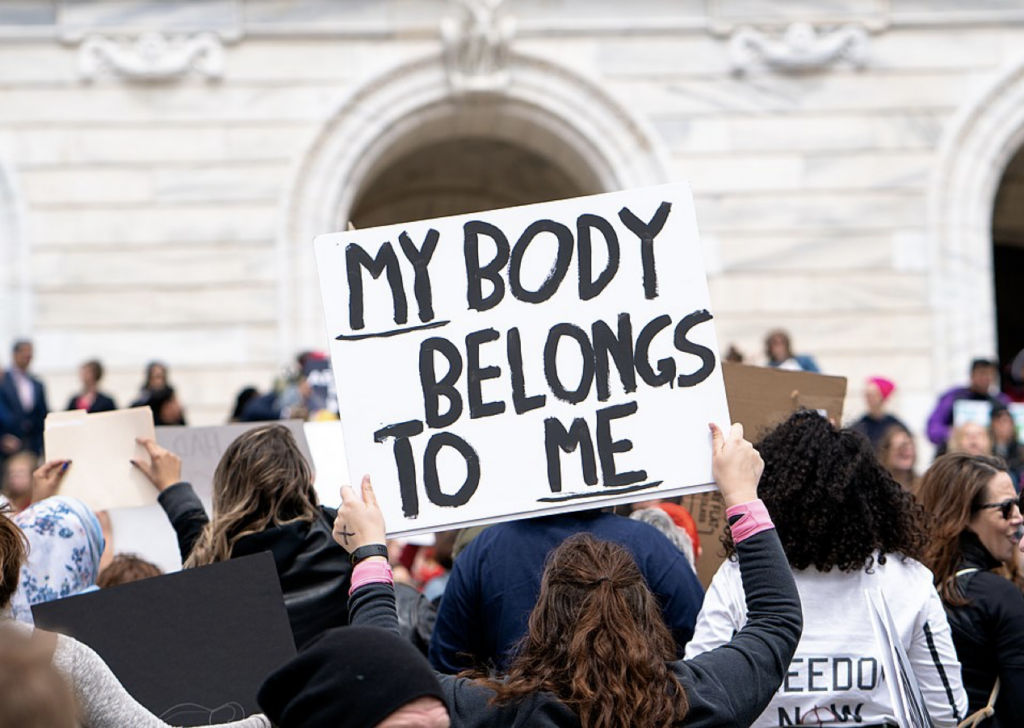
In June 2022, in a devastating decision that will reverberate for generations, the U.S. Supreme Court did away with Roe v. Wade, a ruling that for nearly 50 years gave American women the Constitutional right to abortion without excessive government restriction. As such, the Supreme Court’s ruling in Dobbs v. Jackson Women’s Health Organization marked the first time that the Supreme Court eliminated a fundamental right for half the US population.
Now, four years after the end of Roe, 41 states ban abortion to some degree. Of these, 13 states have total abortion bans, and four states (Iowa, Florida, Georgia, and South Carolina) have six-week gestational age trigger bans that went into effect immediately after the Dobbs decision. Translating these bans into people’s lives and it means that one in three women now live in states where abortion is not accessible.

The consequences in so many parts of the country of taking away a woman’s autonomy to make decisions about her body are immeasurable, not only for women seeking reproductive care but for nation’s healthcare system. Consider what has happened since 2022:
- There are now more infant deaths in states with severe abortion restrictions.
Women experiencing life-threatening pregnancy complications or whose fetus has a deadly abnormality (like not having parts of the brain) cannot end their pregnancies in states like Texas until they develop severe infection, or the fetal heartbeat stops. Due to this policy, infant death rates in states like Texas are going up. This was confirmed by a study published in the Journal of the American Medical Association where researchers compared trends in Texas against states without stringent abortion restrictions, finding a 12.7% increase in infant deaths above expectation driven primarily by more deaths of infants with congenital defects.
- A mother’s risk of dying is higher in states with abortion bans.
A 2023 report from the Gender Equity Policy Institute (GEPI) finds that mothers living in states that banned abortion are nearly twice as likely to die during pregnancy, childbirth or soon after giving birth, compared to those in states without abortion bans. In Texas, maternal mortality rose 56% in Texas in the first full year of the state’s ban and was up 95% among White women. Even more troubling, during the same period, mothers in Louisiana were three times more likely as mothers in supportive states to die during pregnancy, childbirth, or soon after giving birth. - Women and young girls can face serious harm from restrictive abortion bans.
Young girls who are raped and become pregnant face the prospect of a forced birth with severe repercussions for their bodies, such as organ trauma and preeclampsia, which causes seizures. Additionally, women with an ectopic pregnancy, when a fertilized egg develops in the fallopian tube, face the risk of not getting surgical treatment in states with near-total abortion bans even though women die every year from an ectopic pregnancy. In one case, a woman in Texas had to drive 18 hours to get care.
- Doctors are leaving states where they once practiced due to abortion bans.
Since the Dobbs ruling in 2022, increasingly restrictive abortion laws have caused alarming rates of OB-GYNs to stop practicing medicine in parts of the country, resulting in maternity care deserts where no hospital or clinic offers obstetric care. In states like Texas, Tennessee, Idaho, and South Carolina, OB-GYNs and trainees are leaving due to legal threats, professional restrictions, and the moral distress of not being able to provide care they know their patients need. According to the Commonwealth Fund, 60% say they fear legal retaliation, and almost 40% say they limit emergency pregnancy or miscarriage care. - States that ban abortion cost the US economy billions annually.
A 2025 National Bureau of Economic Research (NBER) study finds that 13 states with near-total bans have lost over 144,000 net residents annually since the Dobbs decision, producing a brain drain that could impact businesses in these states. Linked to these findings, an analysis by the Institute for Women’s Policy Research (IWPR) concludes that 17 states that have either an abortion ban or extreme restrictions cost the national economy $61 billion annually due to their poorer economic, labor market, and maternal health outcomes.
The other major development since Dobbs is a significant increase in public support for legal abortions. According to 2025 findings from the Public Religion Research Institute (PRRI), 63% of Americans say abortion should be legal in most or all cases and 68% oppose laws that make it illegal to use or receive through the mail FDA-approved drugs for medical abortion, including a majority of Americans across party affiliation (81% of Democrats, 72% of independents, and 53% of Republicans).
These views are also held by many people of faith. The latest finds from the Pew Research Center find that 82% of religiously unaffiliated Americans say abortion should be legal in all or most cases, as do 68% of Black Protestants, 63% of White nonevangelical Protestants and 57% of Catholics.
Yet, polls find that about three-quarters of White evangelical Protestants (74%), especially those who believe that protecting the sanctity of life is a moral imperative, contend that abortion should be illegal in all or most cases. This concerns many religious leaders and reproductive health experts who worry about the serious repercussions of infringing on the religious beliefs of other denominations as well as the health of American women.
The question for evangelicals is simple: whose life is sacred in America? If the pro-life movement only focuses on the unborn and lawmakers continue to enact rigid abortion bans, girls, mothers, families, and physicians will be harmed and public concern about the well-being of women will only increase.